
Containment that matches the risk
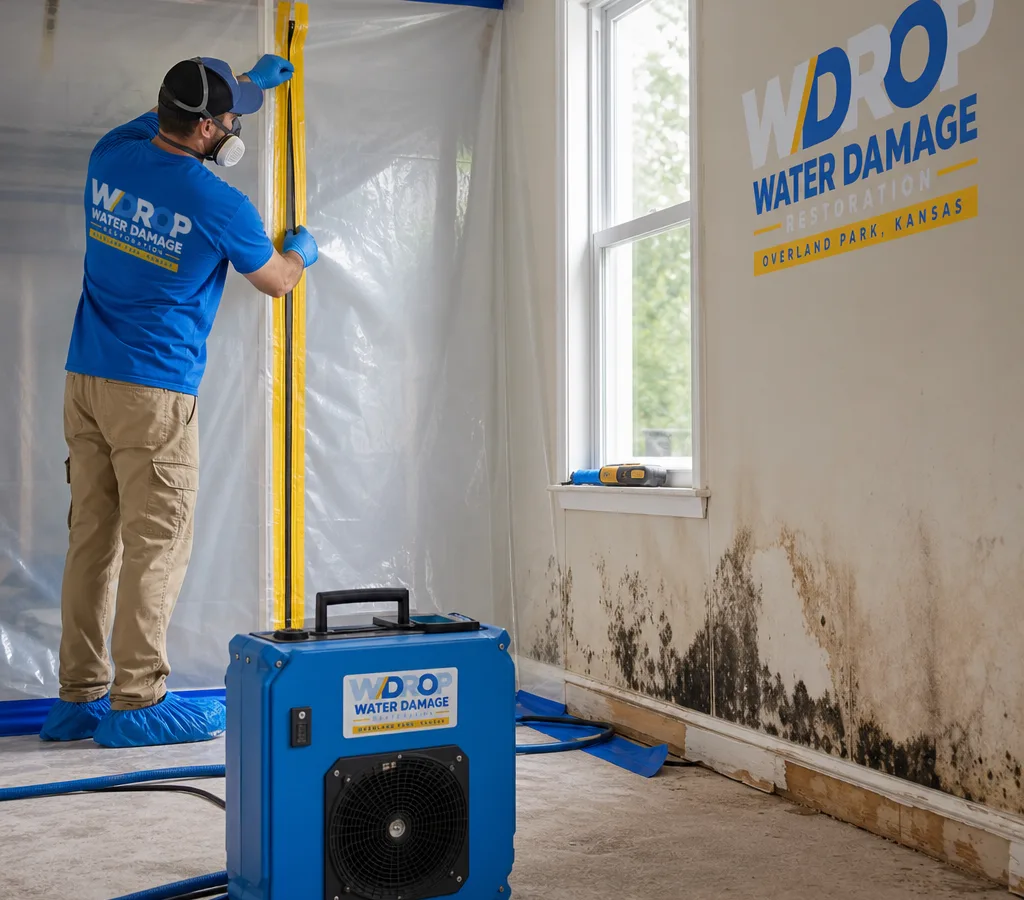
We isolate the affected area with plastic sheeting and controlled airflow so dust and spores stay out of bedrooms, HVAC returns, and main living spaces.
Serving Overland Park, Kansas & surrounding areas
If you smell mustiness, see staining, or have had a recent leak, we can inspect, contain, remove, and clean the affected areas so your home is safe to use again. Water Damage Restoration Overland Park provides careful remediation with clear communication and a written scope before work starts.
Searching for mold removal Overland Park KS usually means one of three things is happening: you found visible growth, you noticed persistent odors, or you are dealing with moisture after a plumbing issue or storm water intrusion. Mold is a moisture problem first. The right cleanup removes contaminated material, cleans what can be saved, and fixes the conditions that let mold return.
Overland Park homes often have finished basements, tight interior spaces, and mixed-use areas like laundry rooms and storage rooms where humidity can build up. When mold is present, the priority is to keep spores from spreading to clean rooms. That is why professional remediation starts with containment and air control, not demolition.
We focus on practical outcomes: a controlled work area, removal of unsalvageable porous materials such as affected drywall or insulation, detailed cleaning using HEPA filtration, and guidance on what needs to dry or be repaired so the issue does not come back. If your mold concern started after a water event, the best next step is a coordinated plan that addresses both moisture and contamination. You can also learn how our team approaches water damage restoration when water intrusion is part of the story.
We isolate the affected area with plastic sheeting and controlled airflow so dust and spores stay out of bedrooms, HVAC returns, and main living spaces.
We use HEPA air scrubbers and HEPA vacuuming, and we remove contaminated porous materials when cleaning alone will not solve the problem.
Framing, concrete, and other non-porous or semi-porous materials can often be cleaned, detailed, and treated based on site conditions.
Mold returns when moisture returns. We point out the likely contributors—leaks, humidity, drainage, and ventilation—so the fix is complete.
You get a written scope and straightforward expectations on what will be removed, what will be cleaned, and what comes next.
Mold growth needs moisture and a food source. In practice, we most often find issues in:
Overland Park has a wide mix of home ages and remodel styles, so we avoid assumptions and verify conditions on site. During the inspection we look for the moisture pathway—an active leak, elevated humidity, or a past water loss that never dried fully—then set containment and removal methods based on what we see, not a one-size checklist.
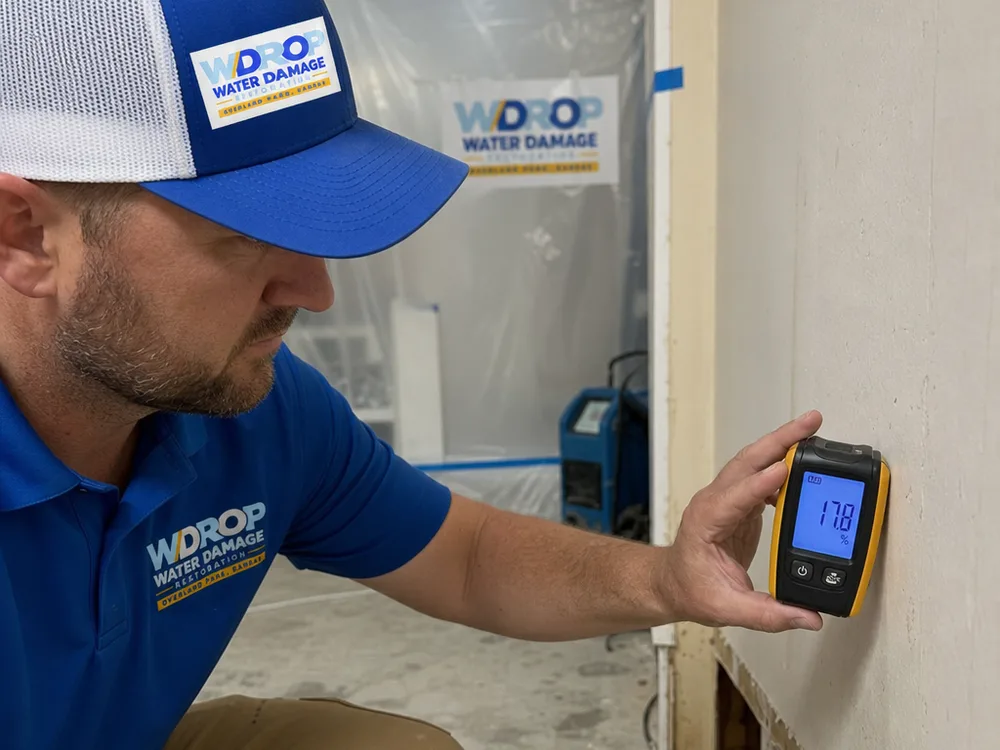
We identify the affected areas, look for the moisture source, and explain what materials are likely salvageable versus what should be removed. You receive a written scope so the plan is clear.
We set barriers, establish negative air when appropriate, and protect adjacent rooms. This step helps prevent cross-contamination during removal and cleaning.
Porous materials that cannot be reliably cleaned, such as moldy drywall, insulation, or soft furnishings in the work zone, are removed and disposed of properly.
We HEPA vacuum and clean remaining surfaces, including framing and concrete, with methods appropriate to the material and condition. Air scrubbers run to reduce airborne particles during work.
If moisture is still present, we guide drying and ventilation improvements. Fixing the moisture driver—leak repair, drainage correction, dehumidification, or ventilation—is what prevents repeat growth.
We walk the area with you, explain what was done, and outline next steps if rebuild or repairs are needed after removal.
Mold removal in Overland Park typically ranges from about $800 to $6,000+, with small, contained areas often landing around $800 to $2,000 and larger or multi-room projects commonly ranging $2,500 to $6,000+ depending on what must be removed.
The final price depends on the size of the affected area, how much drywall, insulation, or flooring is impacted, whether containment with negative air is needed, access in attics or tight crawlspaces, and whether active moisture is still present. The exact cost is confirmed after an on-site inspection and a written scope.
Most mold remediation projects take 1 to 3 days for removal and cleaning, with longer timelines when multiple rooms are involved or when drying time is needed after an active moisture issue. The schedule depends on containment setup, how much material must be removed, and whether dehumidification is required to bring moisture levels down before closing things back up.
Porous materials like drywall and insulation often need to be removed when they are mold-contaminated, because they are difficult to clean thoroughly. Structural framing, concrete, and some hard surfaces can often be cleaned with HEPA methods and appropriate antimicrobial steps, but we decide that based on the material type, how deeply it is affected, and how long moisture was present.
Mold spores can move through a home via air movement, including return air pathways, which is why containment and air control matter during remediation. If the concern involves supply or return ducts, we will discuss next steps for that specific situation, including whether the system should remain off during parts of the work and what additional cleaning may be appropriate.
Many homeowners can stay in the home during remediation when the affected area can be isolated and the work is contained, but it depends on the location and sensitivity of occupants. If the mold is in a main living area, near bedrooms, or if anyone has asthma or immune concerns, we may recommend temporary adjustments to reduce exposure while removal and cleaning are underway.
Bleach can lighten staining on some hard surfaces, but it does not solve the moisture problem and it is not a reliable remediation plan for porous materials like drywall. Long-term results come from controlled removal and cleaning and making sure the area is dry and stays dry.
Leave affected materials as-is and avoid disturbing visible growth, because agitation can spread spores to clean areas. If it is safe, stop the moisture source, such as shutting off water to a leaking fixture, and keep doors to the area closed. We will confirm a containment plan, what items should be moved, and what access we need when we arrive.
Tell us what you are seeing—odor, staining, a recent leak, or a damp basement—and we will schedule an inspection, explain the scope, and outline the safest path to remove mold and prevent it from returning in your Overland Park home.