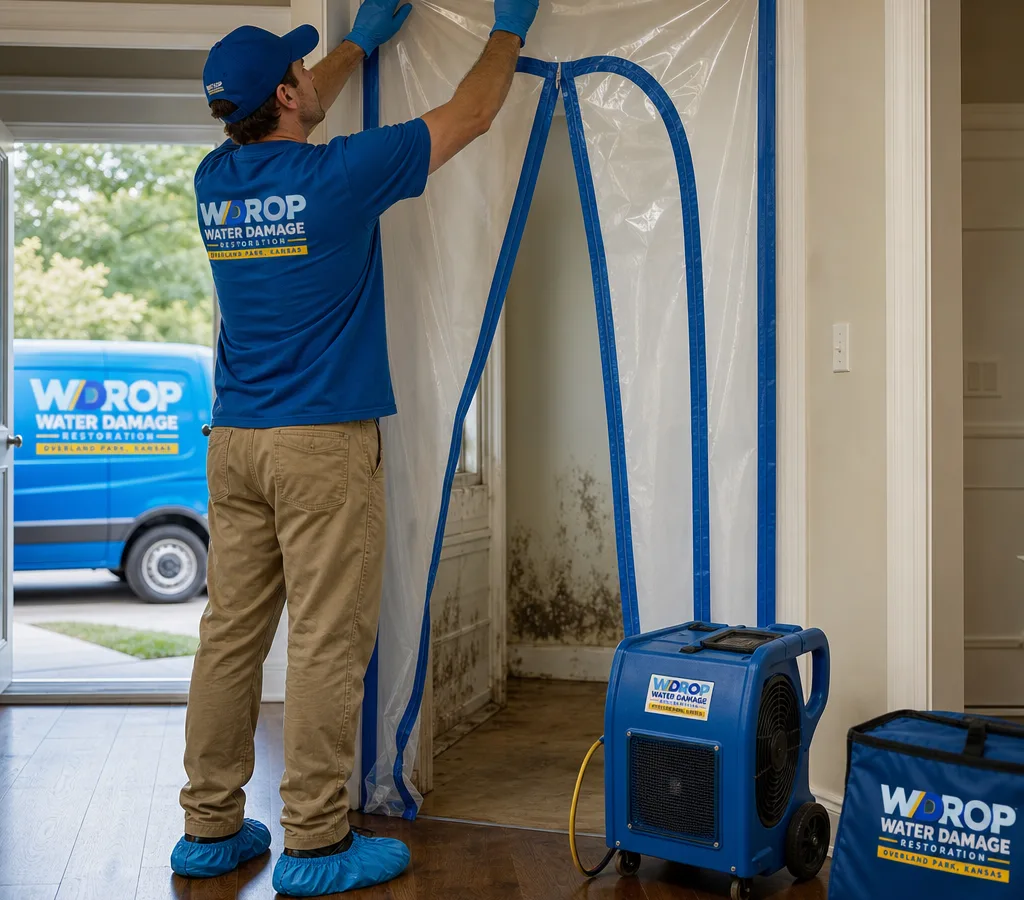
Clear containment and dust control
We isolate the work area with poly sheeting and controlled entry so spores and debris stay inside the remediation zone, not drifting through the rest of the property.
Serving Overland Park, Kansas & surrounding areas
If you smell musty odors, see staining, or had a recent leak, we locate the moisture source, contain the area, remove contaminated materials when needed, and clean and verify the space so you can use it again with confidence.
Searching for mold remediation Overland Park KS usually means something has already changed inside your home or building: a persistent damp smell, a wet basement corner that never dries, or a wall that bubbled after a plumbing leak. Effective remediation is less about spraying a chemical and more about controlling air movement, removing what cannot be cleaned, and fixing the conditions that let mold return.
Our team at Water Damage Restoration Overland Park provides mold remediation in Overland Park for homes, apartments, and light commercial spaces. We focus on practical, jobsite-ready steps: moisture mapping, containment, negative air, HEPA filtration, careful removal of impacted building materials, and detailed cleaning of remaining surfaces.
If the mold is connected to a recent leak, overflow, or storm-related moisture, you may also want a coordinated plan for drying and repairs. Many clients start by getting an inspection and then decide whether they also need water damage restoration to address the underlying wet materials.
We isolate the work area with poly sheeting and controlled entry so spores and debris stay inside the remediation zone, not drifting through the rest of the property.
Air scrubbers with HEPA filtration help capture airborne particles during demolition and cleaning. When the situation calls for it, negative air pressure keeps airflow moving into the contained area.
Some materials can be cleaned, including many solid surfaces. Others, like heavily contaminated drywall or insulation, usually need removal because mold grows into porous structure.
If humidity, poor ventilation, or a hidden leak is feeding the growth, we document what we find so the fix is part of the plan, not an afterthought.
You get a written scope and photos of key steps—containment, removal, and cleaning—so you can track what was done and why.
Most mold jobs follow the same technical priorities, but the details change based on where the moisture is coming from and what materials are involved.
In Overland Park, we often see mold tied to basements and finished lower levels, bathroom exhaust that is not moving enough moisture out, and small plumbing leaks that stayed wet behind cabinets or baseboards. Homes near Indian Creek and other low-lying drainage areas can also have recurring humidity concerns in crawl spaces or basements, which makes moisture control part of the remediation plan.
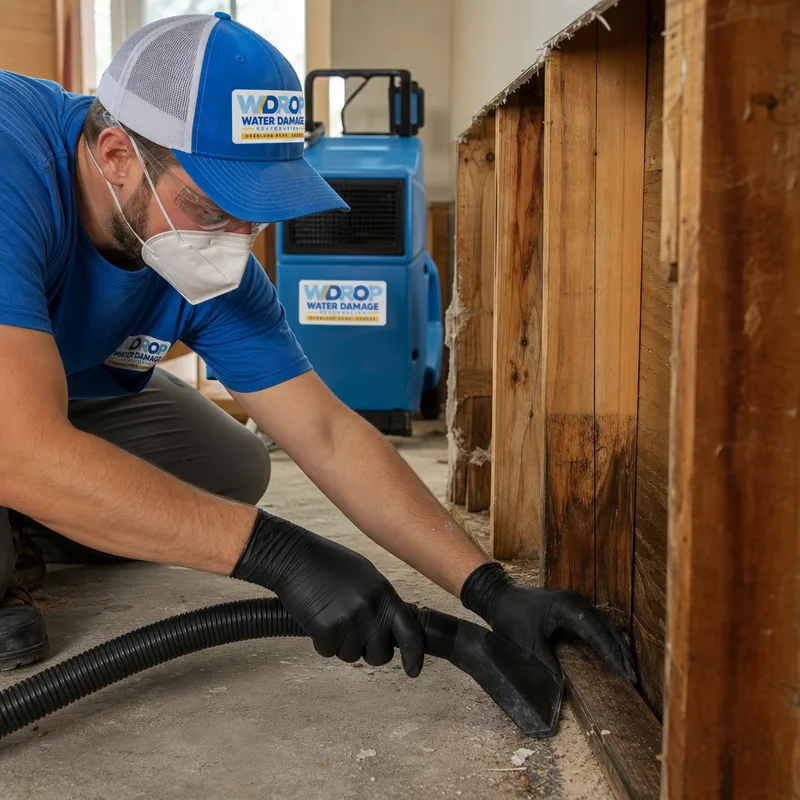
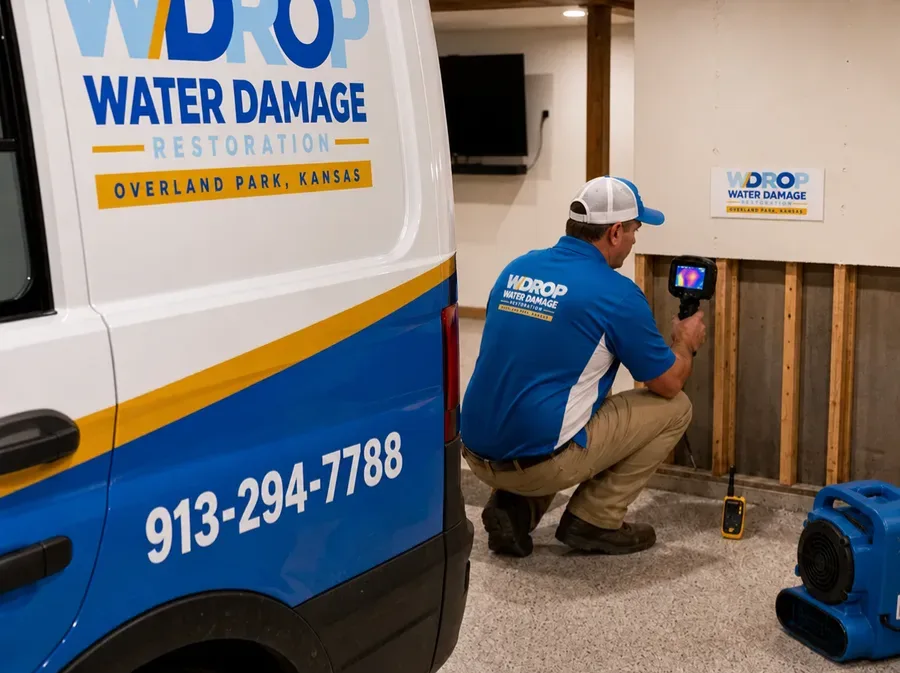
A typical visit starts with a walk-through and moisture checks so we can identify the wet building assembly, not just the visible spotting. If there is active moisture, drying and dehumidification may be recommended before or alongside remediation. Once the work area is isolated, we remove impacted porous materials as required, HEPA-vacuum and wipe remaining structural members, and detail clean adjacent surfaces inside the containment.
If you are coordinating multiple contractors, it helps to know what remediation does and does not include. Remediation addresses contamination and cleaning. Rebuilding—drywall, trim, and paint—is a separate scope that comes after the space is dry and cleared for repairs.
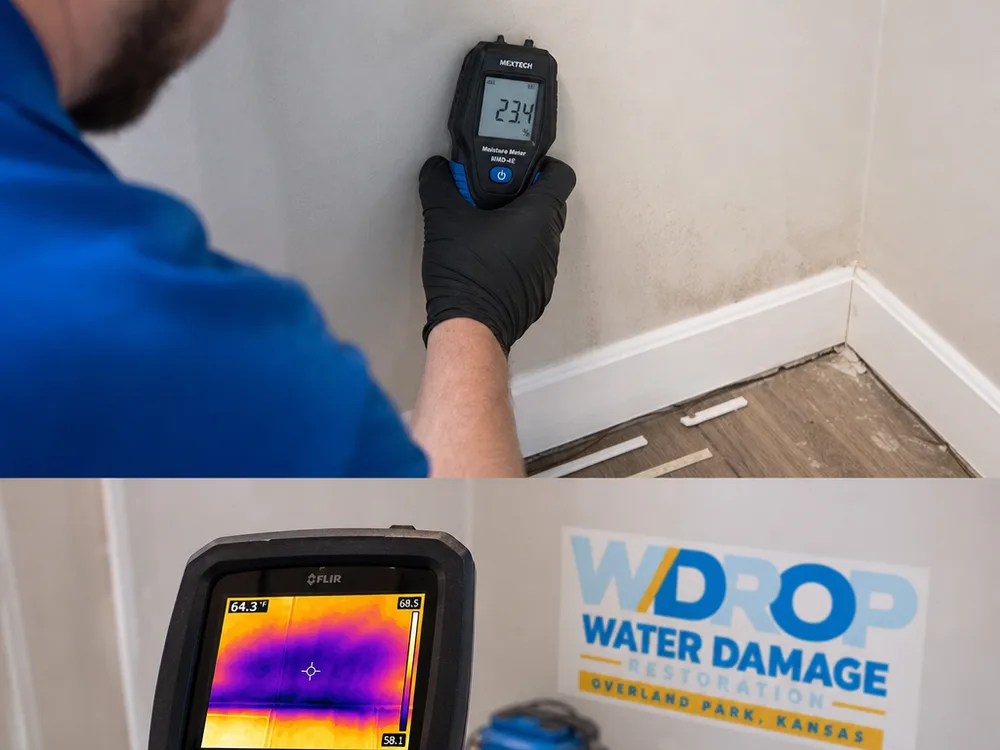
We document visible growth, discuss recent leaks or humidity concerns, and plan the initial site assessment around the conditions you report.
We measure moisture, identify likely sources, establish the written scope, and set containment, protected pathways, and HEPA air control appropriate to the project.
Impacted porous materials are carefully removed and bagged out. Remaining structural surfaces are HEPA-vacuumed, cleaned, and detailed inside containment.
We confirm the area is dry enough for repairs and clean after remediation. If third-party clearance testing is planned, sampling can follow after the work is complete.
Mold remediation in Overland Park typically ranges from about $1,000 to $6,000+, with small, contained areas sometimes falling around $1,000 to $2,500 and larger projects with demolition, multiple rooms, or HVAC involvement running $6,000 to $15,000+.
Final pricing depends on the size of the affected area, how far mold has spread into porous materials, access, the level of containment required, and whether drying equipment is needed to correct active moisture. The exact cost is confirmed after an on-site inspection and written scope.
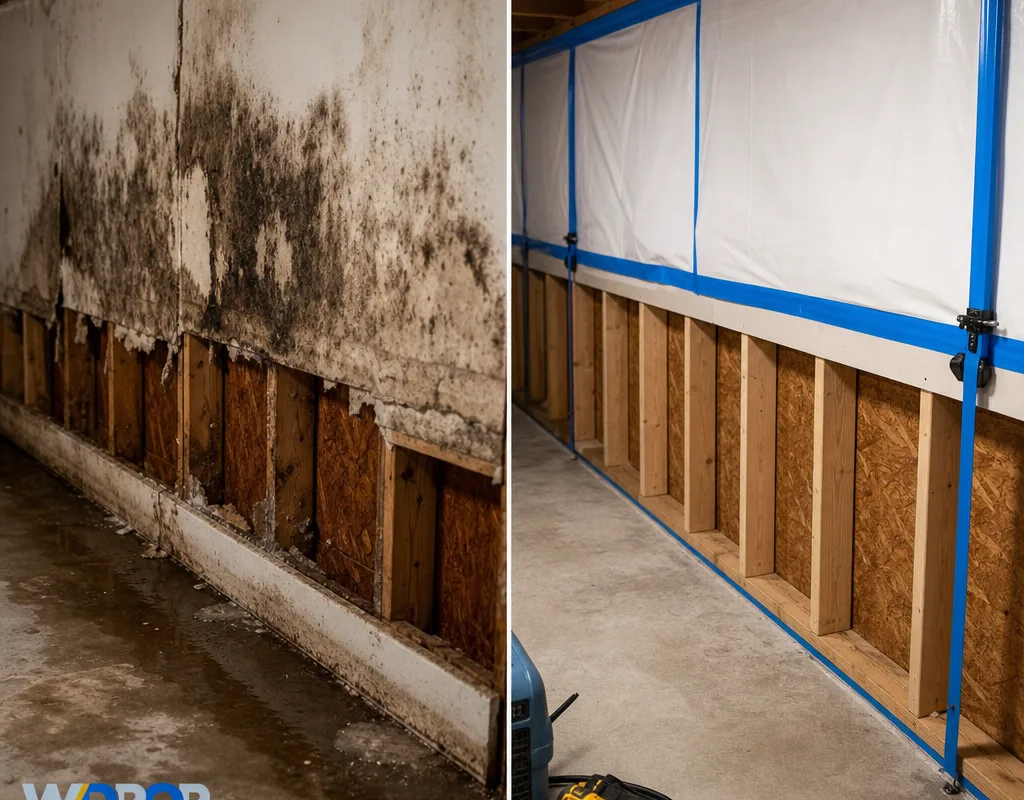
Most mold remediation projects take 1 to 3 days of active work, but the full timeline depends on drying time and how much material removal is required. A small bathroom or closet can sometimes be contained and completed in a day, while a finished basement with wet drywall may need several days because drying and verification need to happen before repairs start.
Drywall and insulation that are moldy or were wet long enough to grow mold are commonly removed because they are porous and hard to fully clean. Solid materials like framing or concrete can often be cleaned with HEPA vacuuming and appropriate cleaning methods once the moisture source is corrected.
It depends on where the work area is and the level of containment required, but many occupied homes can remain in place when the affected area is isolated and air control is set up. If the growth is widespread, in a main living area, or you have heightened sensitivities, it may be more comfortable to stay elsewhere during demolition and cleaning.
Mold returns when moisture returns, so preventing recurrence comes down to fixing leaks, controlling humidity, and improving ventilation where needed. As part of mold remediation in Overland Park, we identify the likely moisture drivers so you can correct the cause before rebuilding.
Clearance testing is optional, but it can be a good idea when the project is large, involves sensitive occupants, or you want third-party confirmation before repairs. If you plan to hire an independent inspector, the most useful timing is after remediation and cleaning are complete and the area is dry.
Yes. When mold is connected to a recent water event, the key is drying wet materials quickly and removing what cannot be dried in place. Addressing the active moisture issue helps prevent the same conditions from recreating the problem behind the walls.
Tell us what you are seeing and where it is happening. We will schedule an inspection in Overland Park, explain what needs to be contained or removed, and provide a written scope you can use to move forward with cleanup and repairs.